
Finding Newton Residents From Records
Newton keeps no single public roster of households. Begin with the question you actually need answered. The Assessor's parcel tools answer a current-owner question. The state voter form handles a registration question. A deed names the parties to a transfer, and an old address can be traced through printed directories, resident lists, newspapers, and census material. Each source captures a different role at a different date. That distinction keeps an owner, a court party, or a faded directory entry from being mistaken for proof of a current household.
Always pair a name with a second marker. A village, a street, a middle initial, a spouse, a parcel number, or a Book/Page reference can separate two Newton residents who share a name. Village labels deserve special care. Chestnut Hill can sit in Newton, Brookline, or Boston, so a postal label alone will not point you to the right records office. Check the street before you choose where to search.
- Check the Newton address or owner in the Assessor's parcel tools and save the SBL and last Book/Page reference.
- Open the Registry record to confirm parties, document type, legal description, and recording date.
- Use the individual voter form only for its intended name, date-of-birth, and ZIP status check.
- For an older household, compare a directory house section with a resident list, census image, or newspaper notice.
- Ask the named custodian for a narrow record when an online index ends, giving a date range and record type.
Note: A careful Newton residents directory search always preserves the date attached to each record it turns up. Older records answer different questions entirely.
Newton Resident Records Offices
Several offices share the work behind the Newton residents directory. Start with the City of Newton Assessor's MapGeo search. It is an address-first layer for parcels and abutters. Recorded deeds live at the Middlesex South Registry of Deeds. Voter status falls to Newton Elections and the Secretary of the Commonwealth. For a full address-by-address walk, the Newton street directory is the right route.
Newton Assessor
Newton City Hall
1000 Commonwealth Avenue, Newton Centre, MA 02459
617-796-1160
Newton City Clerk and Elections
Newton City Hall
1000 Commonwealth Avenue, Newton Centre, MA 02459
617-796-1200
The City Clerk anchors the municipal records. Local vital records, annual census material, the City Archives, and public-record requests all run through that office. Estate and probate files sit elsewhere. The regional Probate and Family Court in Woburn keeps them, while Newton District Court serves as the local trial bench and no consolidated county clerk gathers it all. Contact the office that holds the record.
Newton MapGeo Starts With a Parcel
MapGeo searches by address, owner, co-owner name, and SBL. Its spatial tools help tell neighboring parcels apart. A related GIS Browser layers on parcel boundaries, historic maps, wards, precincts, ZIP codes, zoning, and more. The public view shows a tax-roll owner. Property facts appear too, but the view is not a complete household and offers no separate owner-mailing-address search. Verify a questionable parcel field with Assessing, Inspectional Services, Engineering, or the Registry.
| Newton MapGeo field | How it is used | Newton record limit |
|---|---|---|
| Newton address | Find a Newton property by street address | Search behavior can vary with the entry |
| Newton owner or co-owner | Find a public Newton property attribute | An owner is not necessarily a resident |
| Newton SBL | Carry a Newton parcel identifier into later research | It is not a person identifier |
| Newton spatial filters | Inspect nearby Newton parcels or a map area | Map display is not a household roster |
The Newton tax self-service search takes several routes. Address, owner, parcel ID, bill number, and tax year each work, one mode at a time. Check the current-data notice first.
Newton's tax self-service screen lays out those address, owner, parcel, bill, and tax-year paths, and any property result should be weighed against a recorded document.
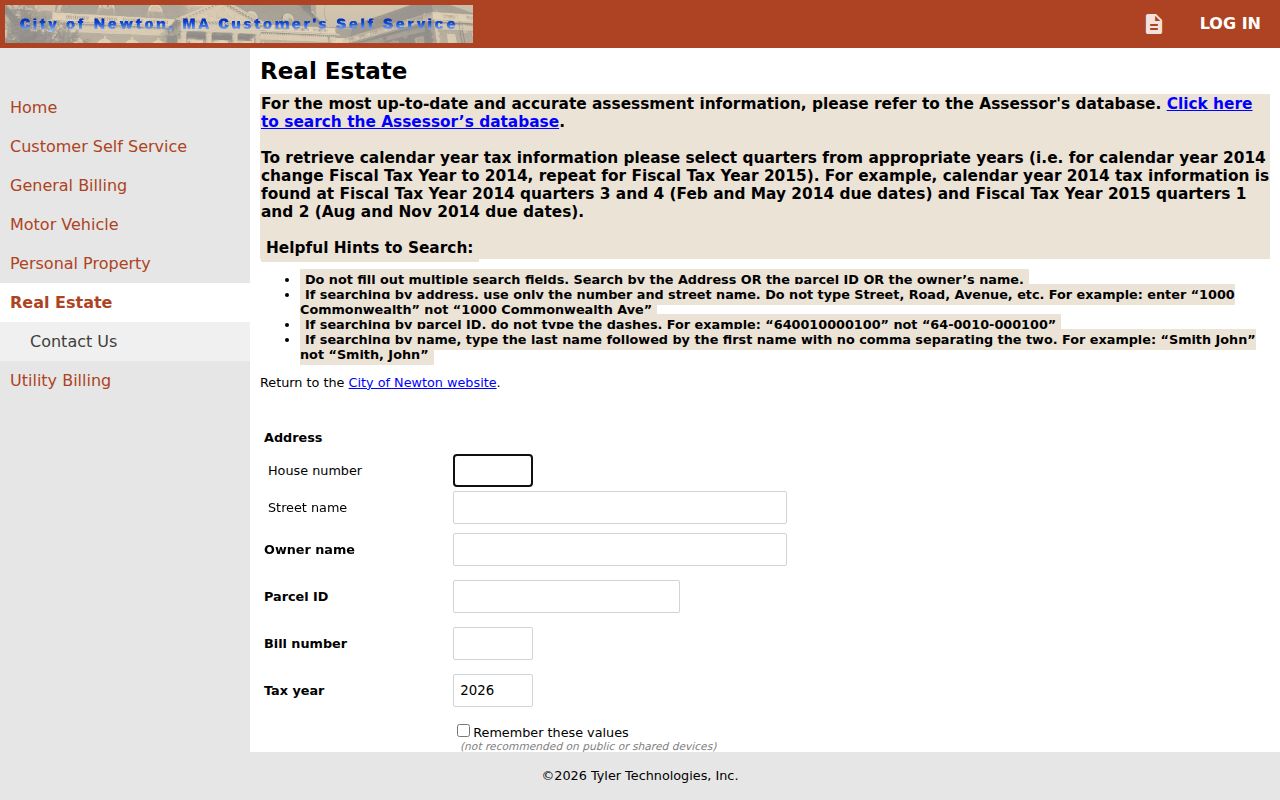
Narrow the parcel there before touching the deed index.
Reading Middlesex South Deed Trails
The Registry's free MassLandRecords portal splits Newton records into Recorded Land, Registered Land, Plans, and Registered Land Plans. Recorded Land offers many search routes. Name, document, Book, property, date, and an unindexed-property route all reach the index, and results can show indexed parties, document type, recording information, and a document image. A Book/Page reference often bridges best. Pulled from the Newton parcel record, it connects the tax roll straight to a deed image.
Grantor means the party transferring an interest. Grantee means the party receiving it. A recorded deed names transaction parties and a legal interest, not everyone who lived at the address. Search the seller as an earlier grantee. Mortgages, discharges, plans, and registered-land records add context along the way, but none should be mistaken for a transfer.
- Newton parcel
- A mapped Newton unit of land used for assessment and reference.
- Newton index
- A searchable pointer to a Newton record, not always the record image itself.
- Newton Book/Page
- The Registry’s chronological document locator.
- Newton criss-cross directory
- A historical Newton address section that reverses a name directory.
Grantor index scans from 1896 through 1973 sit online for anyone to browse. For older deed trails, the Registry of Deeds keeps book and page entries, staff help, and a research room on site. A precise written request works too. Plan on those routes rather than a name search for early records.
Newton Voter Lookup Is Individual
The Massachusetts Voter Registration Search asks for a first name, last name, date of birth, five-digit residential ZIP, and agreement. It returns one person at a time. The result covers registration or pre-registration status, active or inactive standing, a polling location, and officials. It is not a street roster. Newton runs eight wards with four precincts each, and Newton Elections can sort out a status correction or a polling question.
Use the registered name, not a nickname. The state's search tips suggest an old ZIP after a move and two to three weeks for a new registration to appear. A protected voter or an Address Confidentiality Program participant may not appear with an actual address. A no-match does not mean the person lives outside Newton.
The fields stay narrow by design. The state voter-registration form shows the individual fields.
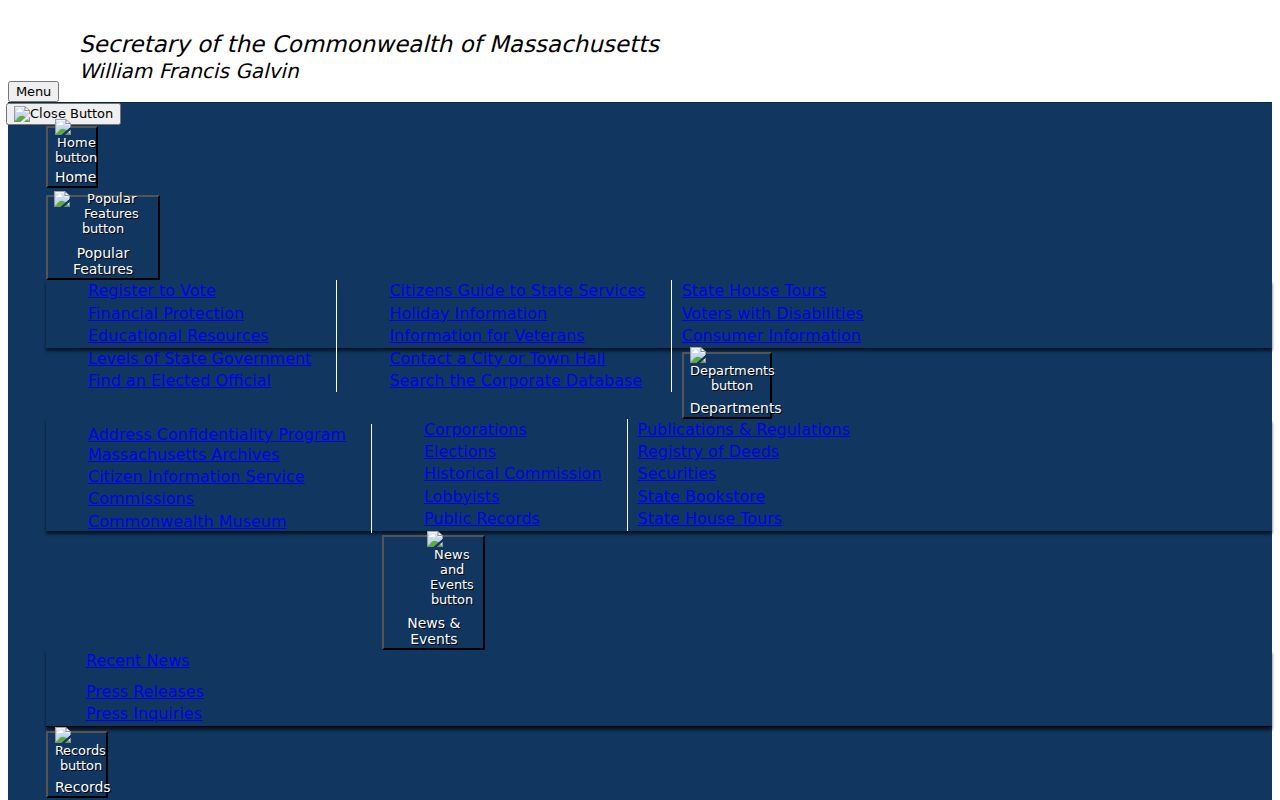
The lookup checks one voter at a time. It is not a block-by-block street directory. Note: Massachusetts opens voter records under field-specific privacy rules, so a public web result never shows every street-list field.
Current Newton Resident Directory Sources
Every current Newton residents directory draws on record-specific sources. Match the source to the question, then check the answer against another dated record. The public portals offer a starting point. Offices and formal requests supply the documented alternative when a web interface cannot answer a narrow question.
| Newton record source | What it can confirm | Newton custodian | Access route |
|---|---|---|---|
| Newton MapGeo parcel | Current Newton tax-roll owner and property clues | Newton Assessor | Free online, phone or email |
| Newton voter status | Individual Newton registration and polling information | State and Newton Elections | Name, DOB, ZIP; local office fallback |
| Newton recorded deed | Transaction party and legal reference | Middlesex South Registry | Free index/image, office, mail, or email pickup |
| Newton court docket | Public party and case-event information | MassCourts and Newton clerk | Remote docket or courthouse terminal |
| Newton annual census | Residents reported at a Newton address on January 1 | Newton Clerk | City route; public export not confirmed |
A property owner is not always the resident. Household members, protected addresses, and unreported changes may be missing from a public parcel result entirely. Multi-record searches belong in the Newton resident lookup workflow.
Newton Court Dockets Add Dates
Dockets attach dates to names. MassCourts searches by name, case number, ticket number, case type, department, division, or location. A result can include party rows, the case number, the filing date, docket events, and a disposition where the department returns one. The case number link opens a docket view. A docket index still does not promise a downloadable image or a complete file.
Defendant-name searches for criminal matters are limited remotely. A courthouse kiosk, the Newton District Court clerk, or another permitted channel may allow broader public access. Sealed, expunged, impounded, juvenile, adoption, and protected family records are not ordinary public name results. A docket shows a party appeared in a matter on a given date. It proves neither residence nor the truth of allegations. The statewide MassCourts public search is the entry point.
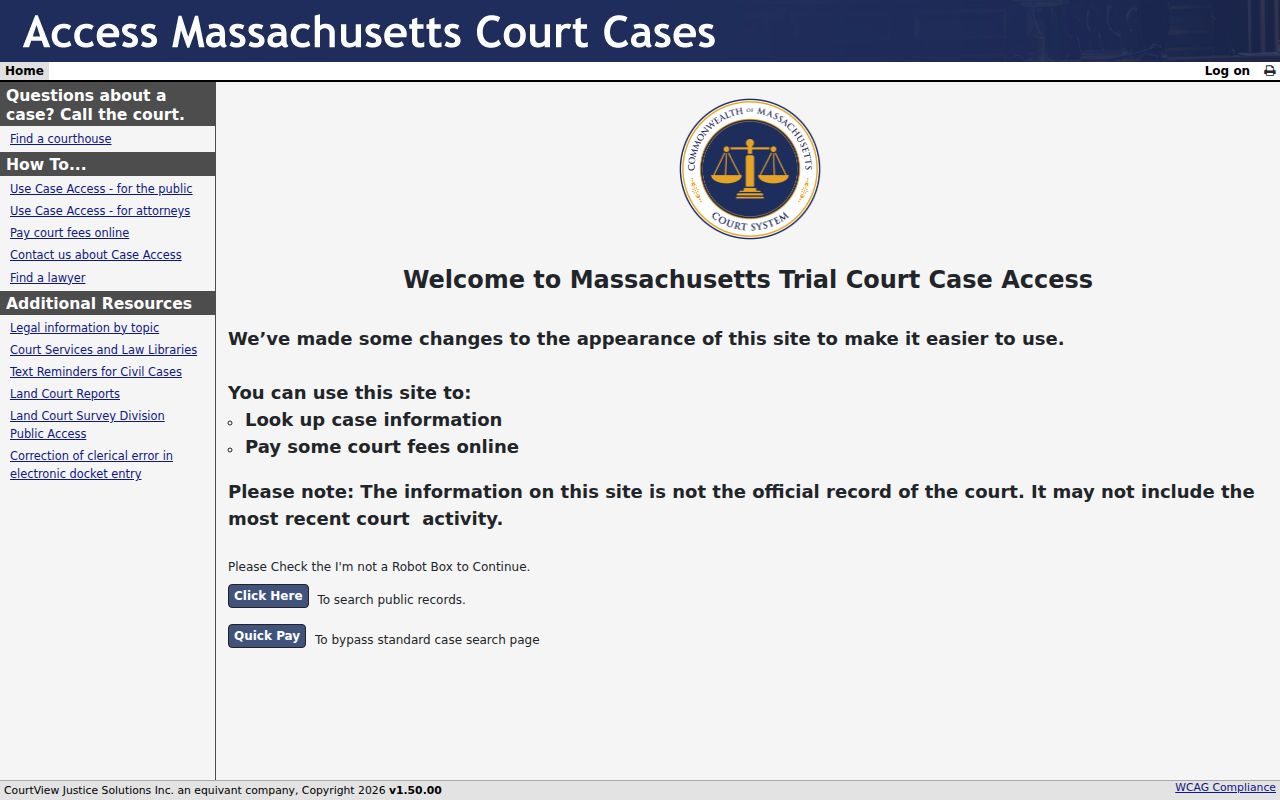
Official court instructions guide the choice of location and search mode. Confirm every result by docket date and case number.
Newton Vital Records Follow the Date
The event date decides the custodian. Newton City Clerk issues certified copies of local birth, marriage, and death records, while statewide records from 1936 forward sit with the Registry of Vital Records and Statistics. The Massachusetts Archives keeps registers from 1841 through 1935. Each record type has its own keeper. A marriage intention, a marriage certificate, a death certificate, and a probate case are separate records.
A Newton certified copy generally costs $10. State and Archives channels set their own fees, eligibility, and processing routes. Birth and marriage records past 90 years, and death records past 50, fall outside the stated statutory restriction. That does not put every record image online. For a missing record, try the event town. For a death, also try the residence town.
The Massachusetts vital-record ordering instructions show the current state routes and eligibility details.
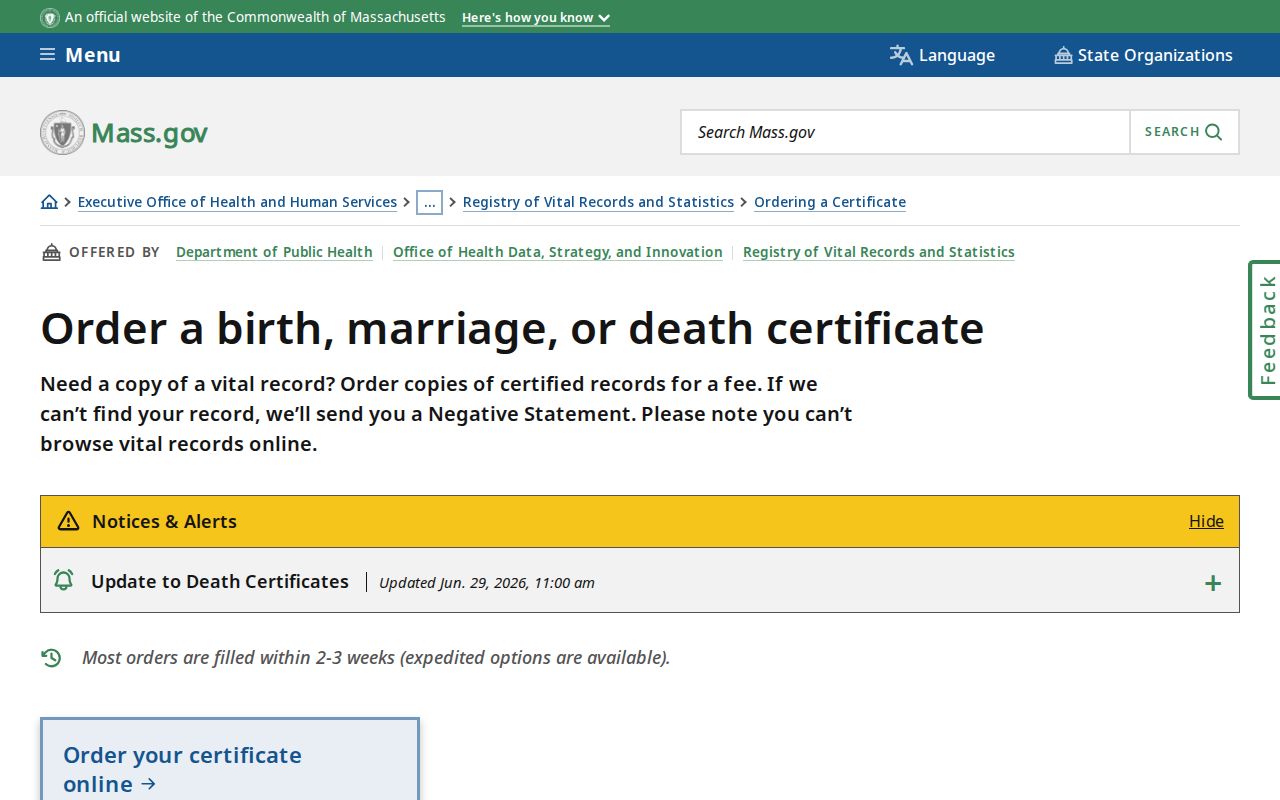
The state form earns its place when a local Newton record sits with the wrong custodian. It also helps when the event location is unclear.
Newton Public Records Requests Need Detail
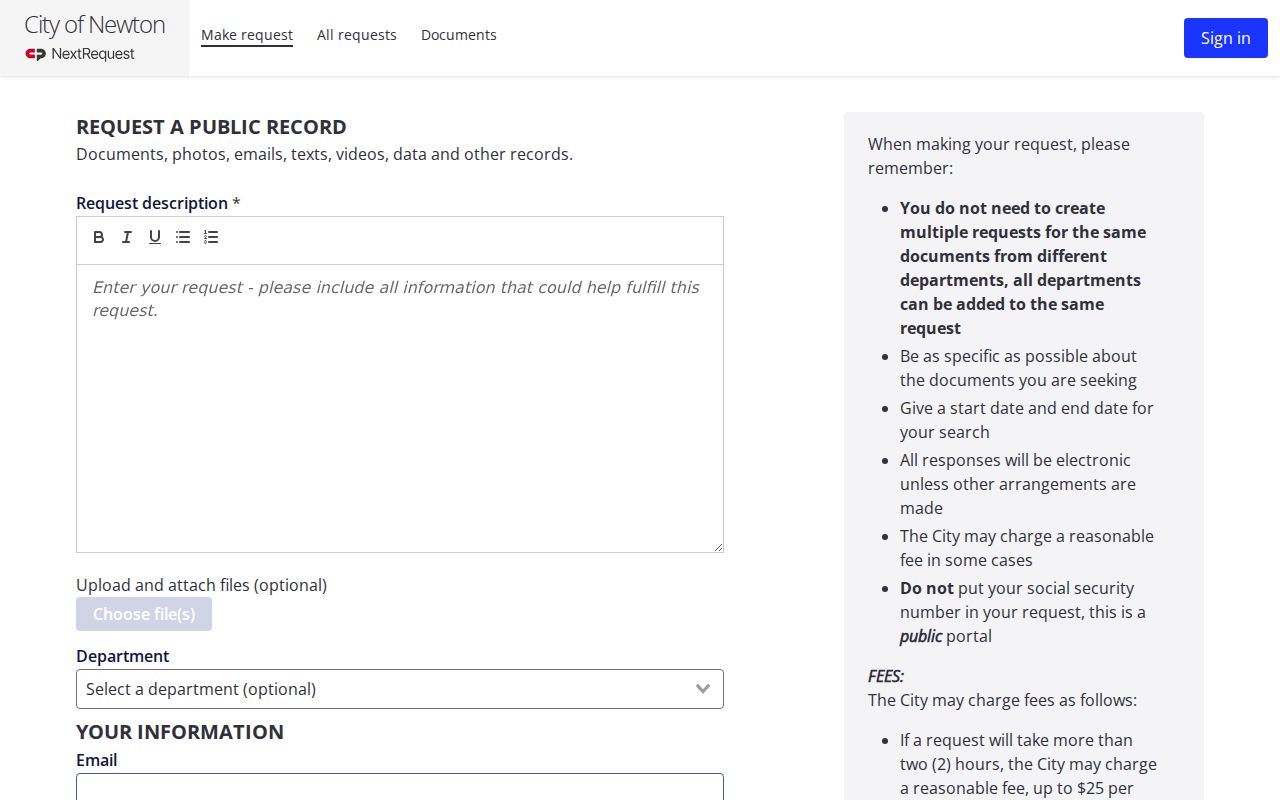
Newton takes public-record requests through NextRequest. Give the department, a concise record description, a date range, and a preferred electronic format. Under the Massachusetts Public Records Law, G.L. c.66 and 950 CMR 32.00, a response is generally due within 10 business days unless a permitted extension applies. Newton may charge up to $25 per hour after two hours of employee time. Listed copy and device costs sit on top.
Precision beats breadth. A request for all records about a person or address rarely works. Separate officers serve the Clerk, Police, Fire, and schools. Exemptions can shield private, medical, investigative, or safety material. Ask the custodian what can be released and which exemption supports a withholding. This route suits a specific municipal index, archival record, or dated administrative item missing from a portal.
Newton’s NextRequest form is the city’s starting point.
Online requests do not replace every channel. A City Archives appointment, library request forms, phone help, mail, or an in-person records visit still serve documented needs.
Newton Has Ten ZIPs and Thirteen Villages
Newton’s geography is finer than a postal label. Thirteen named villages share ten postal ZIP areas. Chestnut Hill, especially ZIP 02467, crosses Newton, Brookline, and Boston. A parcel, court, or municipal record follows the municipality, not the ZIP on the envelope. So test village names and postal city variants. Street spellings matter too.
The City GIS bridges old and new. It layers ZIP codes, wards, precincts, historic properties, streets, and parcel boundaries. Its parcel REST layer holds about 24,200 polygons. A historic directory may say Newton Centre while a modern system prints Newton Center, or it may favor a village label over the postal style. Keep the printed form beside the modern address when tracing a household.
Note: The Newton residents directory trail changes custodians at municipal boundaries even when a neighborhood name or ZIP stays familiar.
Historical Newton Resident Directories
Printed directories for Newton reach back to 1868. Polk editions generally carry the run through 1934. A second run picks up in 1936 and continues to 1985, often on a biennial schedule. The City Archives, Newton Free Library, Internet Archive, and other digital collections split the shelf by year and format. A missing year can simply mean no volume appeared. That gap is not proof a household vanished.
The Local History Room at the Newton Free Library keeps directories, resident lists, newspaper microfilm, obituary and biography indexes, maps, and yearbooks in one place. You will find it on the third floor. It stays locked but opens on request during regular hours, and rare materials need an appointment. Nothing circulates. Microfilm, though, can be saved to USB, emailed, or printed. The full collections and the entry-reading method appear in the Newton directory book.
When a historical directory gives only a name, resident lists, newspaper microfilm, maps, and federal census images can add the household layer. NARA's 1950 Newton search covers 116 enumeration districts. OCR misses names now and then. Pulling the census image or the district description remains the best fallback for a stubborn lookup.
Newton Records Have Real Limits
Public access does not make every field public. A parcel result may leave out the household members. The voter form works person by person, not as a street roster. Court files can be sealed or restricted. Vital records follow eligibility rules, and protected addresses may be swapped or withheld under the Massachusetts Address Confidentiality Program. When a Newton record lacks a name, the cause may be an access rule, a different custodian, or a plain index gap.
Property monitoring in Newton has a useful free option. Middlesex South runs a Consumer Notification Service at no charge for up to three properties. The Registry also warns about paid deed-copy solicitations. Documents and images are free through MassLandRecords or Registry staff. In October 2025 it placed confirmed Grantor Index scans from 1896 through 1973 online. Those scans strengthen historical deed research, as long as the pre-1896 gap is respected.